
FI-156 Storch Southern California Wing
Description:
Base:
Camarillo, CA
Website:
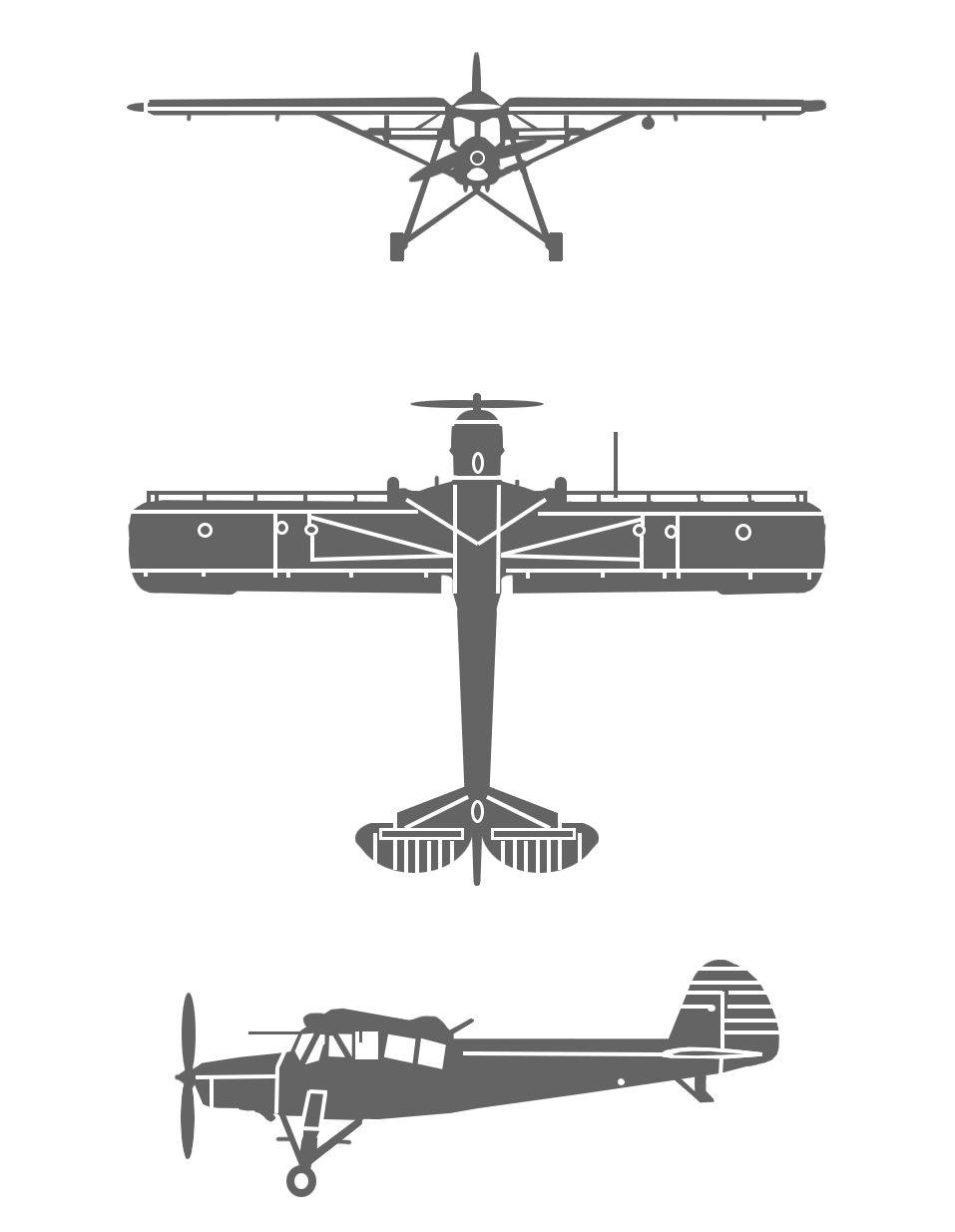
| FI-156 Specs | |
|---|---|
| Role | Liaison |
| Manufacturer | Fieseler |
| Introduced | 1937 |
| Power | 1 240 hp Argus As 10C-3, 8 cylinder invert V piston engine |
| Length | 32 ft 6 in |
| Height | 10 ft |
| Wingspan | 46 ft 9 in |
| Range | 239 mi |
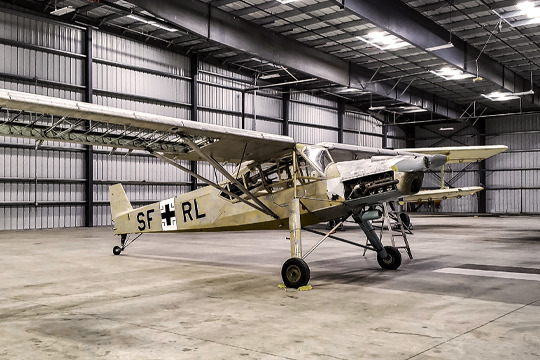
This Fieseler Fi 156 Storch is a rare D-model variant assigned to the Commemorative Air Force’s Southern California Wing in Camarillo, California. Before the CAF acquired it in 2020, the aircraft passed through several owners over the decades, though much of its early history remains incomplete. Despite these gaps, the aircraft has already led an interesting postwar life, including a public appearance at EAA AirVenture Oshkosh in the 1970s, before eventually joining the CAF’s collection. Today, it stands as one of the few surviving examples of its kind—likely the only D-model in North America—and offers an important opportunity to preserve a lesser-known story of World War II aviation.
What makes this Storch especially compelling is its role as a dedicated air ambulance. Unlike earlier variants, the D-model was specifically adapted to carry two stretcher patients and a medical attendant, underscoring a humanitarian role often overlooked in wartime aviation history. The Southern California Wing is focused not only on returning the aircraft to flying condition but also on interpreting this unique mission, highlighting how the Storch was used to evacuate wounded personnel from forward areas. The restoration presents significant challenges, particularly in sourcing parts for its rare Argus engine and reconstructing components with limited original documentation. Yet the effort underscores the CAF’s mission to bring history to life through preservation and education.
The Fieseler Fi 156 Storch was a highly distinctive and versatile aircraft of World War II, designed in the mid-1930s as a light liaison and reconnaissance craft for the German Luftwaffe. It entered service in 1937 and quickly gained fame for its exceptional short takeoff and landing (STOL) capabilities, thanks to its long, high-mounted wings, fixed leading-edge slats, and large flaps. These features enabled it to operate from makeshift fields, roads, and mountain slopes, with takeoff distances as short as 150 feet under optimal conditions.
Constructed with a steel-tube fuselage covered in fabric and powered by a 240-horsepower Argus engine, the Storch generally carried two or three crew members and was employed in various roles, including artillery spotting, medical evacuation, and command transport. Its ability to fly slowly—stalling at just over 30 mph—gave pilots exceptional low-altitude maneuverability, making it invaluable on every front, from North Africa to the Eastern Front. Over 2,900 units were produced, and it became renowned for dramatic missions such as the 1943 rescue of Benito Mussolini from a mountain stronghold, showcasing how capable this seemingly simple aircraft was even under the most challenging conditions.