Five Myths About World War II Aircraft – Debunked
Most people believe these WWII aircraft myths. They’re wrong. The Second World War saw some of the bravest aviators and most legendary aircraft of all time, but the real history is often more complex and intriguing than the tales passed down through the years. Here are five persistent myths about World War II aircraft and what actually happened.
Myth 1: The de Havilland Mosquito Was Invisible to Radar The Mosquito, affectionately dubbed the “Wooden Wonder” due to its wooden construction, holds the enduring myth of being invisible to Axis radar. While the wood didn’t reflect radar very well, the metal components – propellers, engines, weapons, and fuel tanks – certainly did. Regardless, its ability to dart across enemy territory at low altitude, proved more than a match for enemy radar, especially during the early years of the war.
Myth 2: The P-51 Single-Handedly Won the Air War The Mustang was undoubtedly a transformative aircraft, but did it win the war by itself? No. It wasn’t until the Mustang was equipped with the Merlin engine that it finally found its form. The first long-range escort missions didn’t take place till early 1944. Prior to that, Spitfires, Hurricanes, Thunderbolts, and Lightnings battled the Luftwaffe and kept them at bay. Strategic bombing, improved tactics, pilot training, and overwhelming industrial production contributed to Allied air superiority as well.
Myth 3: The Me-262 Was the First Jet Fighter The German Messerschmitt Me-262 is widely considered the world’s first jet fighter. And while it was the first operational jet fighter to take part in aerial combat, it was not the first to fly. In 1939, the Heinkel He 178 became the first jet aircraft to take to the skies, but it couldn’t reasonably be considered a “fighter” by conventional standards. In 1941, the Heinkel 280 became the first true jet fighter to fly, but it was hobbled by numerous issues that plagued early jet engines, and the program was ultimately canceled.
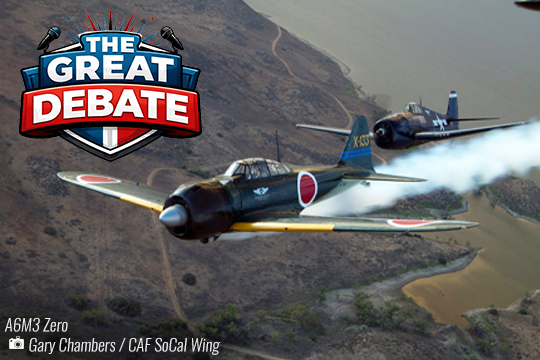
Myth 4: The Mitsubishi Zero Was an Invincible Super Fighter Early in the Pacific War, the Zero developed a fearsome reputation as a fighter that was all but unbeatable in aerial combat. However, its advantages came at the cost of armament and self-sealing fuel tanks. When Allied pilots and planners learned (and exploited) its weaknesses, the Zero’s advantages quickly diminished. As new aircraft such as the F6F Hellcat and F4U Corsair entered the arena, Japanese losses began to mount.
Myth 5: Axis “Wonder Weapons” Could Have Changed the War Late war German technological achievements, such as the Me-262, Me-163, and even flying wing style prototypes, often appear in “What if?” discussions, suggesting they could have reversed the Third Reich’s fortunes. In reality, these aircraft came into the fold too late and in too few numbers to meaningfully affect the course of the war. Stacked against well trained Allied pilots with exceptional tactics, these flying wonders were little more than footnotes to a book that was already written. Innovation alone was not enough to surmount the Allied advantages.
Like stories like these?
ABOUT THE AUTHOR
Annie Flodin is an aviation journalist, photographer, and historian based in Fort Worth, Texas. She has worked in the aerospace industry for nearly a decade, much of which was spent as a corporate historian for The Boeing Company. In this role, she worked closely with the Commemorative Air Force on several projects. She is currently pursuing her Private Pilot License and one day hopes to fly for the CAF.