Were Women Part of the Air War
Yes, women did fly during World War II. And their achievements built on a strong tradition of female aviators who were already making history before the war began.
Not just in one country, and not just in one role. Before the War, women like Amelia Earhart, Bessie Coleman, Maryse Bastié, and others set records, competed in major air races, and worked as flight instructors and test pilots. These pioneers laid the groundwork for the wartime contributions that followed.
The Civil Air Patrol (CAP), founded just days before Pearl Harbor, also welcomed women as pilots and instructors. Women in the CAP taught navigation, mechanics, and flight to both male and female cadets, playing a crucial role in training new aviators from the very start of America's involvement in the War.
Across the United States, Great Britain, and the Soviet Union, as well as among pilots from Canada, Poland, and other nations, women flew military aircraft in roles that included ferrying, testing, and even full combat missions. While many people know about the American Women Airforce Service Pilots (WASP), the story is much broader and international. At the center of this story was one of the most important and often overlooked organizations of the War: the Air Transport Auxiliary.
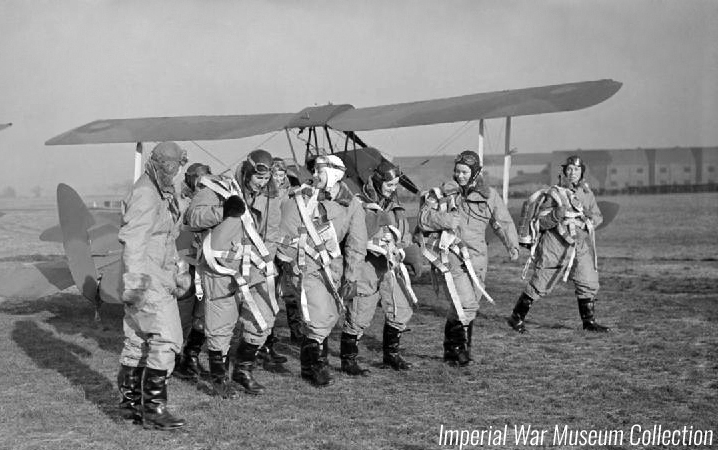
Circa 1940: Early ATA Women’s Section pilots pass newly built De Havilland Tiger Moths at Hatfield, Hertfordshire. (Wikkimedia - Imperial War Museum Image 382)
Founded in Britain in 1940, the Air Transport Auxiliary (ATA) was created to solve a critical wartime problem: how to move aircraft quickly from factories and repair depots to operational units. Rather than rely solely on Royal Air Force pilots, the ATA recruited experienced civilian aviators—including women.
The organization’s reach extended well beyond Britain. Pilots from countries including Canada, New Zealand, and South Africa trained at home before serving with the ATA, while Polish and Dutch aviators—many in exile—also joined its ranks. Together, they formed one of the most international flying operations of the War. At its peak, women made up roughly one in eight ATA pilots, and they came from across the Allied world, creating a truly multinational operation that kept aircraft flowing to the front lines.
These pilots ferried fighters, bombers, and trainers—often without radios, in poor weather, and in aircraft they had little time to learn. They were expected to transition between multiple aircraft types with minimal instruction, a testament to their skill and adaptability. The ATA also broke new ground by granting women pilots equal pay, a policy championed by Pauline Gower.
The United States: WASP
American aviator Jacqueline Cochran flew with the ATA before the United States had its own program, helping shape what would come next. Even before the formation of the WASP, many American women were already working as flight instructors, mechanics, and ground crew—roles critical to the expansion of pilot training during the War.
In 1943, the United States established the Women Airforce Service Pilots, combining earlier efforts led by Jacqueline Cochran and Nancy Harkness Love.
More than 1,000 women served as WASP pilots, ferrying aircraft, testing repaired planes, and towing targets for training. WASPs flew over 60 million miles and in nearly every aircraft type in the U.S. inventory.
The Soviet Union: Women in Combat
While the United States and Britain used women primarily in support roles, the Soviet Union deployed women directly into combat aviation.
Under Marina Raskova, three all-female aviation regiments were formed, including the famous 588th Night Bomber Regiment.
Flying outdated Polikarpov Po-2 biplanes—slow, lightly armed, and made largely of wood and fabric—these pilots operated under some of the most dangerous conditions of the War. Often flying at night with minimal instruments, they would cut their engines and glide silently toward their targets before releasing bombs, earning them the nickname “Night Witches” from German forces.
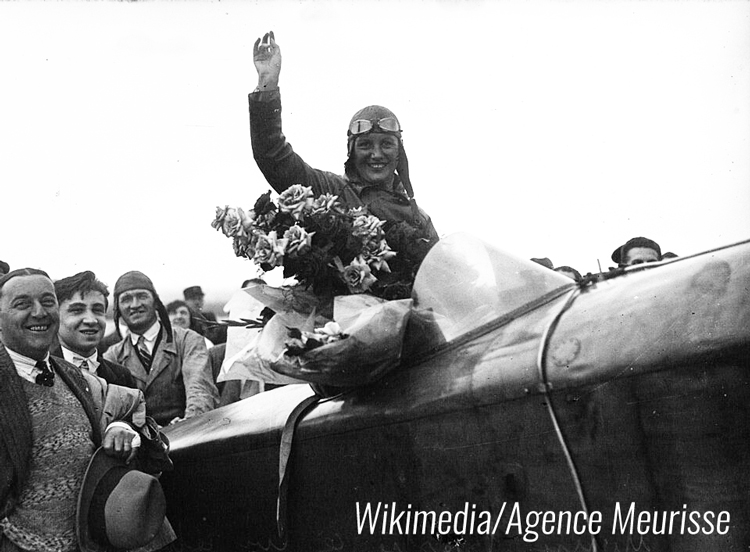
Circa 1931: Celebrated French aviator Maryse Bastié, later a commander in the Free French forces during World War II. Photo: Wikimedia/Agence Meurisse.
Not every country developed large-scale programs, but women still played roles in military aviation.
In Germany, women were usually not involved in combat or regular operational flying, but a few served as test and ferry pilots. The most famous was Hanna Reitsch, who flew advanced and experimental aircraft for the Luftwaffe.
Among the Free French, women aviators such as Maryse Bastié contributed to aviation before and during the war, although France did not establish a large, organized group of women pilots. Some continued to fly in exile and supported Allied organizations. Female Free French aviators took on a range of roles: ferrying and transporting aircraft, delivering mail and vital supplies, conducting reconnaissance, and serving as flight instructors for new pilots in Allied training programs. Their contributions, though smaller in number, were significant in supporting the Free French war effort and the broader Allied cause.
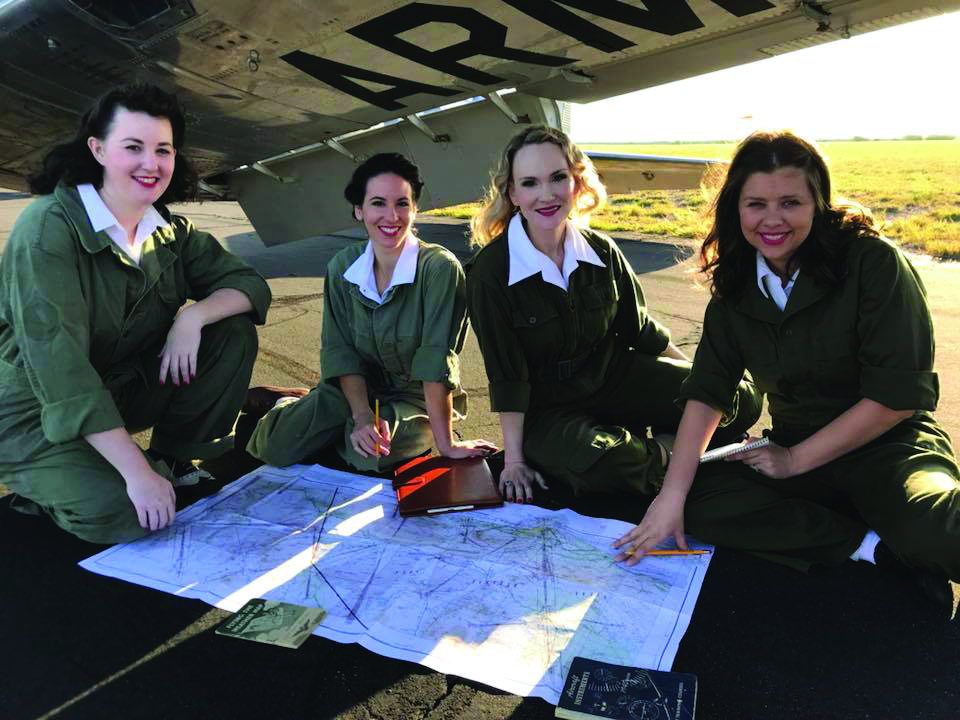
Behind the scenes of the CAF’s RISE ABOVE WASP, a Hemlock Films production telling the story of America’s pioneering women military pilots.
Women showed they could fly military aircraft in tough conditions. Although many programs ended after the War, their achievements opened the door to greater inclusion, inspired future generations, and helped advance aviation.
The story of women pilots in World War II is not just about breaking barriers; it is also about how they overcame those barriers together. From ferry flights over Britain to combat missions on the Eastern Front, these pilots were part of an international effort that kept the war in the air. The Air Transport Auxiliary clearly shows what can happen when skill and opportunity come together, no matter a person's nationality or gender.
It was a turning point in history—one that reshaped who could take to the skies. Today, women serve as military pilots around the world, a legacy born in the urgency of World War II.
Learn More About Women in World War II Aviation
The story of women pilots in World War II is still being discovered, shared, and preserved today.
If you want to explore these stories further, the Commemorative Air Force offers several ways to learn more and get involved:
• Explore the CAF RISE ABOVE program, which shares the stories and bios of Womens AirForce Service Pilots (WASP) and Tuskegee Airmen.
• Watch episodes of CAF Warbird Tube, featuring historians, pilots, and restoration experts who bring these stories to life.
• Become a member or visit a CAF Unit or event near you, where you can see historic aircraft up close and meet the people keeping this history flying.
• Support aircraft preservation efforts, helping ensure these stories—and the aircraft that carried them—are not forgotten. These programs connect the past to the present, continuing the legacy of those who helped shape aviation history. Give TODAY!
Frequently Asked Questions
Did women fly military aircraft in World War II?
Yes. Women flew military aircraft in multiple countries during World War II. While most served in support roles such as ferrying and testing aircraft, some—particularly in the Soviet Union—flew combat missions.
Which countries had women pilots during World War II?
The United States, Great Britain, and the Soviet Union had the most prominent programs. In addition, women from Canada, New Zealand, South Africa, Poland, and the Netherlands flew with Allied organizations like the Air Transport Auxiliary. Germany also had a small number of female test and ferry pilots.
Did women fly in combat during World War II?
Yes, but primarily in the Soviet Union. Units like the 588th Night Bomber Regiment flew thousands of combat missions against German forces. In the United States and Great Britain, women were not used in combat roles.
What was the Air Transport Auxiliary (ATA)?
The Air Transport Auxiliary was a British civilian organization that ferried aircraft during World War II. It included pilots from multiple countries and was one of the first organizations to employ women as military aircraft pilots in large numbers.
What did WASP pilots do during World War II?
Pilots in the Women Airforce Service Pilots ferried aircraft, tested repaired planes, and supported training operations such as towing targets. Their work helped free male pilots for combat duty overseas.
What were the WAVES in World War II?
The WAVES were the women’s branch of the U.S. Navy during World War II. Established in 1942, the program allowed women to serve in non-combat roles, helping free male personnel for duty at sea. WAVES worked in a wide range of positions, including aviation maintenance, communications, air traffic control, intelligence, and training. By the end of the war, nearly 100,000 women had served in the program. While WAVES were not used as pilots, they played a critical role in naval aviation by supporting the aircraft, infrastructure, and operations that kept the war effort moving.
Share This Story
Help spread this fascinating story about the female aviators of WWII.

About the Historian
<p style="margin:0; line-height:1.7;">
  Annie Flodin is an aviation journalist, photographer, and historian based in Fort Worth, Texas.
  She has worked in the aerospace industry for nearly a decade, including several years as a
  corporate historian for The Boeing Company. In that role, she collaborated with the
  Commemorative Air Force on a variety of projects focused on preserving and sharing aviation
  history. She is currently pursuing her Private Pilot License and hopes to one day fly with
  the CAF.
</p>
SOURCES:
• https://www.kenleyrevival.org/content/history/women-at-war/air-transport-auxiliary
• https://www.rsgs.org/blog/eager-for-the-air-the-women-pilots-of-the-air-transport-auxiliary
• https://www.nationalww2museum.org/war/articles/wasp-women-airforce-service-pilots
• https://cafriseabove.org/wp-content/uploads/2021/10/Women-Airforce-Service-Pilots-Killed-in-Service.pdf
• https://wrightmuseum.org/the-soviet-night-witches/
• https://www.nationalww2museum.org/war/articles/night-witches-soviet-women-pilots-who-terrified-nazi-soldiers