A Texan Story of September 11
AT-6 Texan Ace in the Hole: CAF Houston’s Connection to September 11
Twenty-five years after September 11, 2001, millions of Americans still remember exactly where they were when they heard the news. Millions weren't yet born. For them, September 11 is history, known through photographs, video, and the stories of those who experienced it.
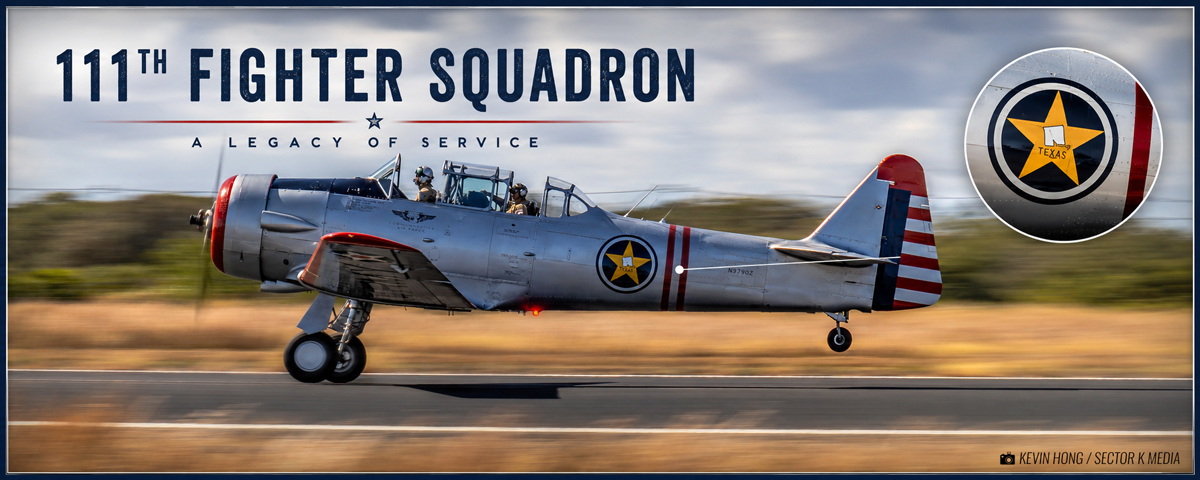
At the Commemorative Air Force Houston Wing, an AT-6A Texan named Ace in the Hole is on display. The aircraft dates to the World War II era, but the insignia on its fuselage links it to another generation of American military service and to one extraordinary day in our nation's history. The Ace in the Hole emblem belongs to Houston's 111th, a Texas Air National Guard unit dating back to 1923. On September 11, 2001, members of that unit were among the many Americans called to action as the country struggled to understand and respond to an unprecedented attack.
Their story is one of thousands from that day.
A Morning America Would Never Forget
September 11 began like any other Tuesday. People went to work and school, commercial airliners departed on their scheduled routes, and thousands arrived for another workday at the World Trade Center. President George W. Bush was in Sarasota, Florida, visiting an elementary school.
At 8:46 a.m. Eastern Time, American Airlines Flight 11 struck the North Tower of the World Trade Center. Initially, there was confusion about what had happened. Seventeen minutes later, at 9:03 a.m., United Airlines Flight 175 struck the South Tower as millions watched on live television. America was under attack.
The events that followed unfolded with staggering speed. At 9:37 a.m., American Airlines Flight 77 struck the Pentagon in Arlington, Virginia. At 9:59 a.m., the South Tower collapsed. Aboard United Airlines Flight 93, passengers and crew who had learned about the other attacks fought back against their hijackers. The aircraft crashed near Shanksville, Pennsylvania, at 10:03 a.m., before reaching its intended target. At 10:28 a.m., the North Tower collapsed.
In just 102 minutes, four commercial aircraft had crashed, both World Trade Center towers had fallen, and the Pentagon had been attacked. Ultimately, 2,977 victims lost their lives.
For members of the military, first responders, and others charged with protecting the public, the horror they witnessed raised an urgent question: What happens next?
In Houston, the Guard Was Ready
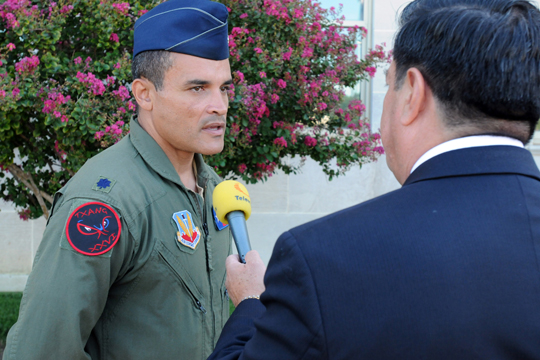
Among them was Lt. Col. Rolando Aguilar, an F-16 pilot with Houston's 147th Fighter Wing. An airline pilot in civilian life, Aguilar was working a 72-hour alert shift with the Guard. He had been sleeping when a crew chief woke him with news that an airplane had struck the World Trade Center.
As the attacks unfolded, Aguilar and other unit members prepared their F-16 Fighting Falcons and waited for orders. Military commanders, government officials, and air traffic controllers were trying to make sense of an unprecedented situation in real time. No one yet knew whether more attacks were coming.
Then the order arrived. The Houston pilots were to launch, intercept, and protect Air Force One.
President Bush had departed Sarasota aboard the presidential Boeing 747, but rather than immediately return to Washington, Air Force One remained away from the capital while officials determined where the President could be kept secure. The Houston F-16s intercepted Air Force One over the Gulf of Mexico near the Louisiana coast. Armed with live weapons, the fighters were there to respond to any threat to the President's aircraft.
There was a remarkable connection between the President and the Houston unit protecting him. Decades earlier, Bush had served in the Texas Air National Guard, flying F-102 Delta Daggers with the 111th Fighter Interceptor Squadron at Ellington. He had worn the same Ace in the Hole emblem carried by the unit responding that day.
Air Force One landed at Barksdale Air Force Base in Louisiana while Aguilar remained overhead providing cover. Additional fighters launched from Houston as the President's journey continued. Other military units joined the effort as Air Force One traveled to Offutt Air Force Base in Nebraska before eventually returning to the Washington area.
Years later, Aguilar recalled the weight of the assignment: "I was humbled and proud of the responsibility that I was entrusted with at the time." His mission was extraordinary, but it was only one small part of an enormous response.
Thousands Answered the Call
As the attacks unfolded, firefighters climbed the stairs of the World Trade Center as thousands tried to escape. Police officers, emergency medical personnel, and civilians helped strangers reach safety. At the Pentagon, military and civilian personnel who had survived the attack immediately began helping the wounded. Coast Guard crews and civilian mariners helped evacuate Lower Manhattan, while air traffic controllers worked to bring thousands of aircraft safely to the ground.
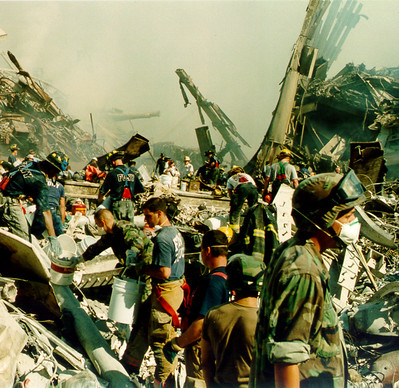
Many who responded were veterans who had already served their country. Others were serving at the time and would see their military careers transformed by September 11. In the years that followed, thousands would deploy overseas, some repeatedly, while others remained at home, defending American airspace and responding to emergencies in their communities.
Many of the heroes of September 11 were people doing what they had been trained to do, under circumstances they could never have anticipated. Some gave their lives doing it.
The Houston F-16 pilots were part of that much larger story.
Citizen-Airmen and a Houston Tradition
The events of September 11 demonstrated the National Guard's distinctive role. Its members live and work in communities across the country while maintaining the training and readiness to respond when called, whether for a natural disaster at home, a deployment overseas, or an unexpected attack.
Houston's tradition of military aviation was already generations old. Ellington Field was established during World War I as a center for military flight training. In 1923, the 111th Observation Squadron was organized in the Texas National Guard and moved to Ellington, where its aviators flew Curtiss Jennys.
On June 6, 1933, the War Department approved the squadron insignia designed by Lt. Earl Showalter: an ace of spades set within a blue ring on a yellow background. Over the decades, the aircraft and missions changed. Members of the unit served during World War II, propeller-driven aircraft gave way to jets, and the unit became part of America's Cold War air defense network, eventually flying the F-102 Delta Dagger and later the F-16 Fighting Falcon.
Through those changes, generations of Houston airmen continued to serve under the Ace in the Hole.
That history of readiness mattered on September 11. The men and women at Ellington did not have to be assembled after the emergency began. They were already there, trained and prepared to respond. Their work continued after the attacks. Under Operation Noble Eagle, Air National Guard units helped defend American airspace as the country entered a new era of homeland defense.
An Ace Still Flying
Today, the Ace in the Hole insignia can still be seen on an airplane flying over Houston. The CAF Houston Wing's Ace in the Hole is an AT-6A Texan, part of the famous family of advanced trainers that prepared military pilots during World War II.
The airplane and September 11 are separated by generations, yet the insignia connects them.
Follow the Ace painted on its fuselage, and it leads through decades of Houston aviation history, from the citizen-airmen of the 111th to the pilots, crew chiefs, maintainers, and support personnel who were ready when their country needed them on September 11.
That is one reason keeping history flying matters. Historic aircraft capture our attention. We hear an engine overhead and look up. We see an insignia or name painted on a fuselage and ask what it means. That question can lead us beyond the machine to the people whose stories might otherwise grow increasingly distant.
Twenty-five years have passed since September 11. An entire generation now knows that day not as something they experienced but as history they have inherited.
The AT-6 Ace in the Hole gives us one small way to keep that history connected to real people. Its insignia can lead us from an old airplane in a Houston hangar to the citizen-airmen who launched in armed F-16s on September 11, and from them to the thousands of Americans who answered when they were needed and the thousands of lives that were lost.
As time passes, fewer people will be able to begin the story by saying, "I remember where I was."
So we find other ways to begin.
Sometimes, all it takes is an old airplane and an Ace painted on its side.
Like stories like these?
Facts & Questions: Ace in the Hole and September 11
What happened on September 11, 2001?
On September 11, 2001, 19 terrorists hijacked four commercial airliners. Two struck the World Trade Center in New York City and a third struck the Pentagon. Passengers and crew aboard United Airlines Flight 93 fought back, and the aircraft crashed near Shanksville, Pennsylvania, before reaching its intended target. The attacks unfolded in just 102 minutes and killed 2,977 victims.
What was the Texas Air National Guard's role on September 11?
F-16s from Houston's 147th Fighter Wing launched from Ellington Field to help protect Air Force One. Lt. Col. Rolando Aguilar and other Houston Guardsmen were among the pilots involved in the mission, part of a much larger military response across the country.
Why did fighters escort Air Force One?
Officials did not yet know whether additional attacks were coming. President George W. Bush departed Sarasota, Florida, aboard Air Force One and remained away from Washington while officials determined where he could be kept secure. Armed fighters provided protection as the President traveled to Barksdale Air Force Base, Offutt Air Force Base and eventually back to the Washington area.
What is the 111th?
The 111th traces its Texas National Guard history to the 111th Observation Squadron, organized in Houston in 1923. Over the following century, its aircraft and missions evolved from observation aircraft to fighters and today's remotely piloted aircraft mission. It is part of the 147th Attack Wing at Ellington Field.
What is the Ace in the Hole?
Ace in the Hole is the historic insignia of Houston's 111th. Approved by the War Department in 1933, the design features an ace of spades pushed through a blue ring against a yellow background and has been carried by generations of Houston-area airmen.
What is George W. Bush's connection to the unit?
Before becoming President, George W. Bush served in the Texas Air National Guard and flew F-102 Delta Daggers with the 111th Fighter Interceptor Squadron. Decades later, members of that same Houston unit helped protect Air Force One while Bush was President on September 11.
Did the CAF's AT-6 Ace in the Hole participate in the September 11 response?
No. The CAF aircraft was not part of the September 11 response. The connection is the historic Ace in the Hole insignia it carries, linking the World War II-era AT-6 to the generations of Houston airmen who have served under that emblem.
Why is the National Guard important to the September 11 story?
National Guard members live and work in communities across the country while maintaining military readiness. On September 11, Air National Guard units were among the forces responding to defend American airspace. Guard units continued homeland defense missions afterward under Operation Noble Eagle.
Why does the CAF tell this story?
Historic aircraft provide a tangible connection to the people behind history. The AT-6 Ace in the Hole may come from an earlier generation, but its insignia opens the door to nearly a century of Houston military aviation and the story of those who answered the call on September 11.
Sources
• National September 11 Memorial & Museum – Events of September 11, 2001 - www.911memorial.org
• Air National Guard – Guard Members’ Personal Accounts of 9/11, including Lt. Col. Rolando Aguilar - www.ang.af.mil
• 147th Attack Wing, Texas Air National Guard – History of the 147th Attack Wing - www.147atkw.ang.af.mil
• 147th Attack Wing – History of the Ace-in-the-Hole Insignia - www.147atkw.ang.af.mil
• Commemorative Air Force – AT-6A “Ace in the Hole” - www.commemorativeairforce.org/aircraft/80